
Relational Power In Motion: Carrying Pacific Stories to the World Stage
Dr. Sierra Keung is taking Pasifika ways of leading to one of the world’s biggest stages for women in sport.
When Sierra received the email confirming her presentation at the International Working Group (IWG) Global Summit, she thought there had been a mistake.
She was convinced she had missed the deadline.
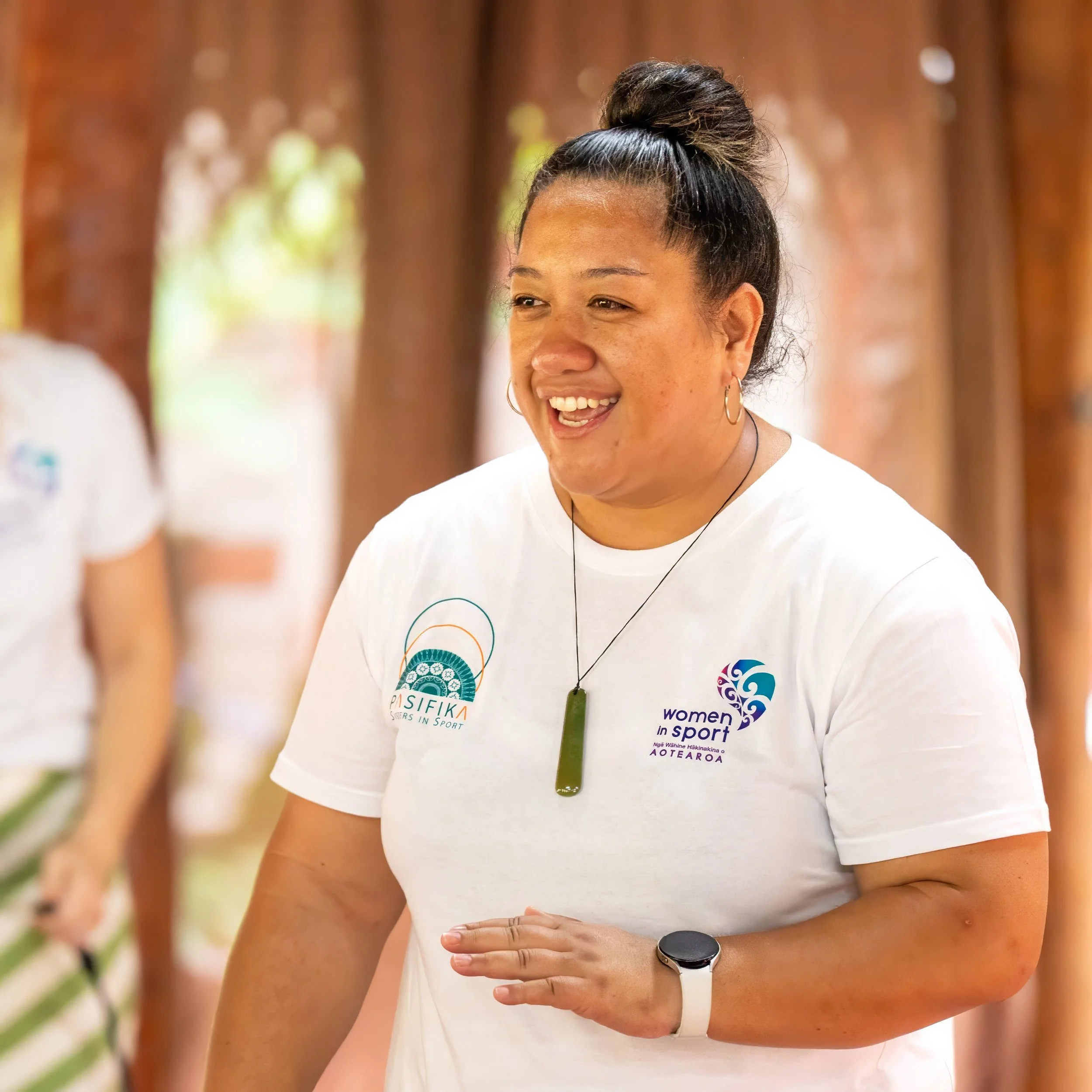
This July, Dr. Sierra Keung will represent Pacific women at the International Working Group (IWG) Global Summit on Women & Sport in Birmingham, England.
Held every four years, the Summit brings together leaders, decision-makers, and changemakers from around the world to shape the future of gender equality in sport.
What Does This Opportunity Mean?
“[I was] excited for our Chairs to share our story on the Global stage (because I wrote it with the intention for them to present), then that excitement turned to feeling the weight when the hospital pass came back to me because our Chairs were unavailable lol.”
“This presentation reflects the voices and experiences of the women and communities who have shaped this work that we’re privileged to be part of. With that comes a responsibility to honour that trust, and to carry our sisters’ stories into a global space in a way that stays grounded in where they come from, while also contributing to how we think about leadership more broadly.”
What is the Presentation About?
The presentation, “Relational Power in Motion”, emphasizes the idea that for us, people of the Pacific, leadership begins with relationships.
“Instead of asking, “How do I get ahead?” it’s more like, “Who am I accountable to? Who am I serving? Who am I bringing with me?”
As the widely known Samoan proverb says, “O le ala i le pule o le tautua”, meaning, the road to leadership is through service. Because leadership is not individual, like many of our cultures, it's collective, and anchored in our values such as faith, family, and community.
Although there are many messages that will be delivered, one of the key themes is that culture is not something we simply acknowledge; it is something that can be used to design. It is strategy, strength, and intentionality. When we lead with our values, with our traditions tautua, ‘ofa, fa’aaloalo, and whānau, we can change how people experience sport, not only as participants, but as leaders.
Why is this Important?
Currently, Pacific women and girls navigate sport systems that often don’t reflect their identities or ways of leading.
At Pasifika Sisters in Sport, we’re learning that when we design spaces with communities and center their values, relationships, and cultural identity, we’re able to create atmospheres where Pacific women and girls are able to thrive, leading authentically, not by adapting to the system but by reshaping it to fit them.
As Dr. Keung prepares to take the stage in Birmingham, she carries more than a presentation.
She carries the stories, relationships, values, and leadership traditions of Pacific women who have, and continue to shape sport in their communities every day.
Through opportunities like IWG, those stories are not only being heard; they are helping shape the systems that govern sport itself.
